Economics: Meaning
· The term or word ‘Economics’ comes from the Ancient Greek oikonomikos (oikos means “households”; and, Nomos means “management”, “custom” or “law”).
· Thus, the term ‘Economics’ means ‘management of households’.
· The subject was earlier known as ‘Political Economy’, is renamed as ‘Economics’, in the late 19th century by Alfred Marshall.
Definition:
Four definitions, each referring to particular stage of the growth of the subject of Economics, are presented here. They are:
1. Smith’s Wealth Definition, representing the Classical era;
2. Marshall’s Welfare Definition, representing the Neo-Classical era;
3. Robbins’ Scarcity Definition, representing the New Age; and,
4. Samuelson’s Growth Definition, representing the Modern Age.

He explains how a nation’s wealth is created and increased.
He considers that the individual in the society wants to promote his own gain and, in this process, he is guided and led by an “invisible hand”.
The publication of Adam Smith’s “The Wealth of Nations” in 1776, has been described as “the effective birth of economics as a separate discipline”.
Welfare Definition: Alfred Marshall (The Neo- classical era)
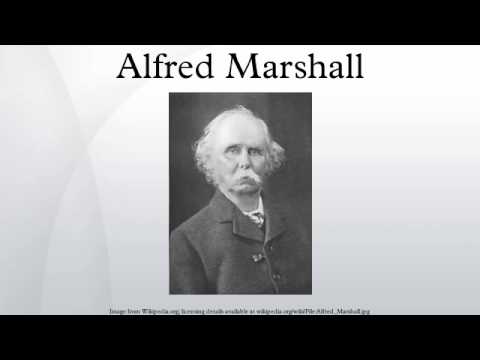
Alfred Marshall (1842-1924) in his book “Principles of Economics” (1890) defines Economics thus: “Political Economy” or Economics is a study of mankind in the ordinary business of life; Thus, it is on one side a study of wealth; and on the other, and more important side, a part of the study of man.”
The important features of Marshall’s definition are:
· Man promotes primarily welfare and not wealth.
· The science of Economics contains the concerns of ordinary people who are moved by love and not merely guided or directed by the desire to get maximum monetary benefit.
· Economics is a social science. It studies people in the society who influence one another.
Scarcity Definition: Lionel Robbins (The New Age)

Lionel Robbins published a book “An Essay on the Nature and Significance of Economic Science” in 1932. According to him, “Economics is a science which studies human behaviour as a relationship between ends and scarce means which have alternative uses”.
The major features of Robbins’ definition are:
· Ends refer to human wants. Human beings have unlimited number of wants.
· On the other hand, resources or means that go to satisfy the unlimited human wants are limited or scarce in supply.
Further, the scarce means are capable of having alternative uses. Hence, an individual grades his wants and satisfies first his most urgent want.
Thus, Economics, according to Robbins, is a science of choice.
Growth Definition: Samuelson (The Modern Age)
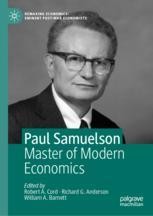
Paul Samuelson published a book "An Intradictory Analysis" in 1948. He defines Economics as “the study of how men and society choose, with or without the use of money, to employ scarce productive resources which could have alternative uses, to produce various commodities over time, and distribute them for consumption, now and in the future among various people and groups of society”.
The major implications of this definition are as follows:
· Like Robbins, Samuelson states that the means are scarce in relation to unlimited ends and that such means could be put to alternative uses.
· Samuelson makes his definition dynamic by including the element of time in it. Therefore, his definition covers the theory of economic growth.
· His definition covers various aspects like production, distribution and consumption.
Of all the definitions discussed above, the ‘growth’ definition stated by Samuelson appears to be the most satisfactory.
